
The Next Phase of AI Isn't Technical - It's Human
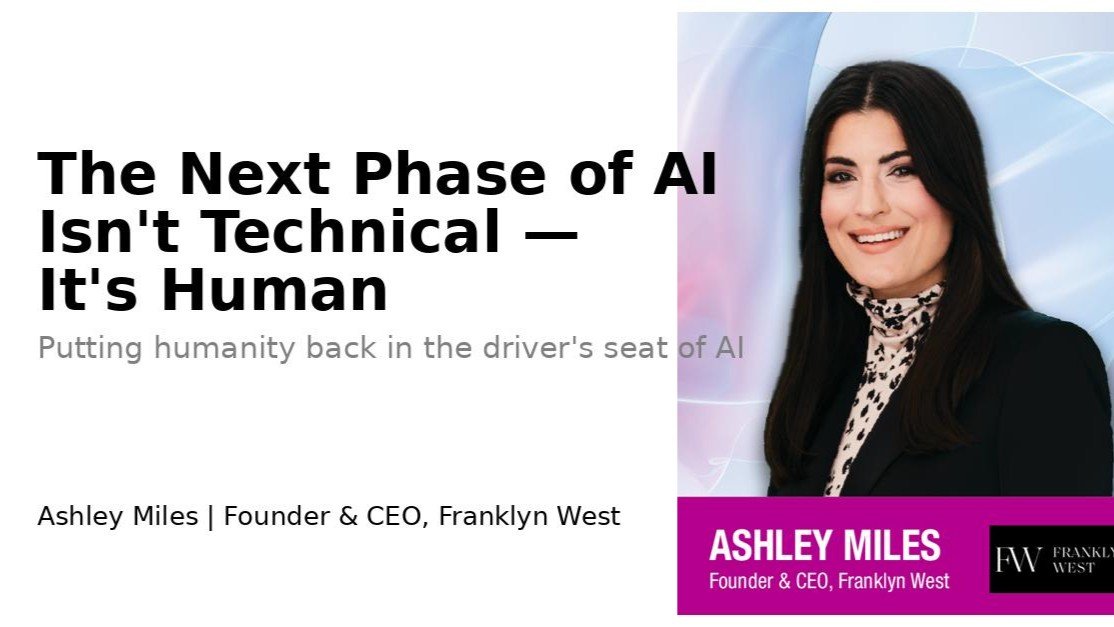
The biggest misconception about AI is that it’s a technology race. It isn’t. It’s a learning race. It’s a people’s race. It’s about prioritizing humanity in the age of AI.
Most companies aren’t failing at AI because the tech doesn’t work – it’s because they’re often implementing it without human judgment, proper governance and guardrails, or a larger business problem to solve. They are focused on the “what” (i.e. we need an AI strategy, insert tech now) versus the “why and how” (how can AI empower our teams to execute faster and better tied to real business outcomes). The organizations that will lead the next decade will accelerate human capability and confidence alongside machine capability. It’s about putting our people and larger business goals ahead of technology.
This shift is happening at the same time as the workforce is going liquid. “Just like how people compile playlists to customize music, companies are going to compile and access skills and expertise to get work done. Hiring human workers for specific skills to use on term-fixed projects, instead of full-time employment,” notes Rishad Tobaccowala author of “Rethinking Work.”
The larger consideration for leaders is how we might transform businesses with care in the AI era, setting people up for success, while delivering scaled growth.
I have the unique pleasure of being an “operator’s operator” living on the inside of world class companies (big and small), working side-by-side with C-suite executives who are trying to navigate this change first-hand. Having a seat at the table to influence larger business decisions during transformational times is fulfilling and why I launched my company in the first place. I love helping leaders solve new problems faster and it’s an honor to make a positive impact across the business community that has given me so much throughout my career.
The pain point I see, however, is watching companies get in their own way when they have an immediate opportunity to modernize and grow. Given my experience building billion-dollar new revenue streams and digital transformations for world class brands, mid-size start-ups, and non-profit organizations, here are three of the most pressing opportunities for leaders to tackle and win in the AI era.
Scale Vision (Break the Silos)
Research shows that organizational and cultural shifts are among the top barriers to AI adoption. Most companies are onboarding tech providers in silos without a clear vision of why and how these tools contribute to a larger business goal. The result is tactical application team by team, versus scaled solutions that drive transformational change.
Companies need to create a larger vision of their digital transformation roadmap with tactical plans to implement at scale. Better internal communication and integrating AI natives within teams helps accelerate growth. Without alignment across these areas, AI remains a high-risk experiment filled with fear and uncertainty rather than a scalable tool to drive more growth. When organizations connect these systems, AI stops being a side project and becomes a culture booster and core driver of productivity and innovation.
“In this era, growth will be defined by how well we connect human insight with machine scale. AI is the unlock and humanity is the multiplier. When people get curious with AI, they use it, evolve with it, and unlock entirely new levels of creativity, capability, and growth. Organizations that get this right will build more resilient, balanced, and future-ready businesses,” notes Laura Molen former President of NBC Universal Media.
Create Centralized Governance and Guardrails
The lack of centralized governance and guardrails creates serious reputational and revenue risks: 67% of organizations are implementing AI without adequate governance structures and 93% of leaders say governance is a major challenge. AI generally doesn’t fail because the models are broken; it fails because humans abdicate judgment too early.
Similarly, we’ve seen companies make billion-dollar bets on AI and metaverse, only to see that strategy unravel quickly when products are killed or don’t perform as expected, resulting in whiplash, exposure, and a lot of money down the drain. Platform dependency risk is significant, when companies outsource core innovation to young or unproven AI partners and traditional consulting firms without putting their own people and business goals first.
“Trust systems will emerge as the human centered power” said Jeanniey Walden Founder of Liftoff Enterprises “winning organizations have already built enough trust with their people, their customers, and their market that AI has something real to amplify.”
The companies that will win in this next era aren’t the ones moving fastest with AI, they’re the ones who build the right systems so their people can move fast and build confidently.
Transform with Care
A strong and well-planned change management strategy is a must-have. AI is advancing at extraordinary speed, however, human capability inside most organizations is not keeping pace. 74% of workers are already using AI tools at work, but only about 33% have received formal training. Yet many organizations still upgrade employee skills periodically rather than continuously. The result is a widening capability gap between machines and people. This gap, not the technology itself, is becoming the defining leadership challenge of the AI era, since 46% of leaders say workforce skill gaps are the biggest barrier to AI adoption.
The Human POV
The companies that win will not simply deploy better technology; they will evolve their people, their partners, and their operating models at the same pace as AI is advancing. The leaders pulling ahead are investing in executive AI literacy, functional training across teams, top-down approach to implementation and use cases, and continuous learning instead of annual training cycles. The real advantage isn’t the technology. It’s how intelligently, confidently and safely people apply it.
Don’t get me wrong, I know well that technology is powerful. And in the hands of talented people with real world experience, focused on driving new business outcomes, you will unleash even more confidence and creativity.
Leaders have a seat at the table to make positive strides that will impact future generations. Our voice matters. Our decisions matter. Is your AI strategy replacing humans or unlocking their greatness?
Written by Ashley Miles, Founder & CEO, Franklyn West for New York Women In Communications (NYWICI)
Full article: The Next Phase of AI Isn’t Technical – It’s Human